




Many offices are not “too loud” because of one noisy device. The bigger problem is echo: voices bounce off bare walls, glass, and smooth ceilings, then hang in the air long enough to blur speech. That “ring” makes calls tiring, meetings less clear, and focused work harder than it should be.
Acoustic office wall art is a practical answer when you want better sound without turning a workspace into a studio. The goal is simple: reduce harsh reflections while keeping a premium, professional look. This article explains what acoustic wall art really means, what it can (and cannot) do, how to choose pieces that look high-grade, and how to plan placement so you get results.
What “acoustic wall art” means in an office
Echo vs. noise: the difference that matters
Noise is the sound you hear in the moment: talking, typing, HVAC, footsteps. Echo is what happens after sound is made: it reflects off hard surfaces and returns as extra “tails” that smear speech. Wall-based sound solutions mainly reduce echo inside the space. They do not usually stop outside traffic or construction noise from entering.
Two product types that get called “acoustic art”
When people say “acoustic wall art,” they often mean one of these:
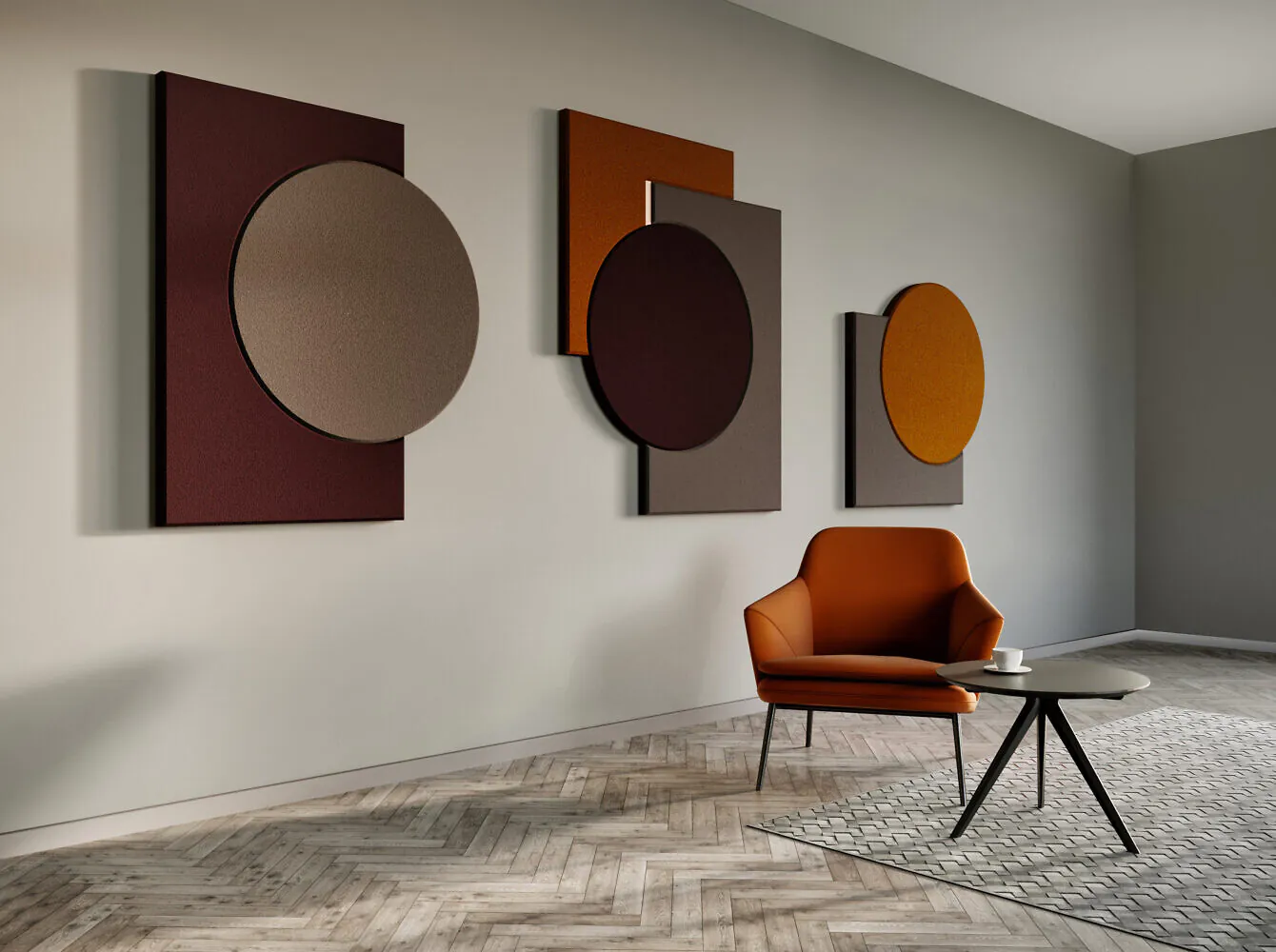
- Decorative acoustic panels designed to absorb sound (often listed with an acoustic rating such as NRC).
- Canvas prints and wall art prints chosen for design impact, sometimes paired with a separate sound plan.
In real offices, a hybrid approach is common: use true acoustic panels where reflections are strongest, and use premium wall art to complete the visual design across the wall.
Why offices often sound harsh
Common causes of echo
Modern workspaces tend to be filled with reflective surfaces: painted drywall, glass partitions, hard floors, and flat ceilings. Sound hits those surfaces and returns quickly, multiplying the “presence” of every conversation. Open layouts can increase this effect because there are fewer soft elements to break up reflections.
Quick signs your space needs sound control
- People raise their voice to be understood, even at short distances.
- Video calls sound “boomy” or less crisp than expected.
- Small meetings spill into nearby desks or work areas.
- The space feels louder even when it is not fully occupied.
How sound-absorbing wall art works
Materials that reduce reflections
Acoustic wall products work by turning part of the sound energy into a small amount of heat through friction inside the material. Common sound-absorbing structures include PET felt, fabric-wrapped cores, and dense fiber-based infill behind a cover. Thickness matters, and so does spacing: a panel with depth, plus a small air gap behind it, can absorb a wider range of frequencies than a thin surface mounted tight to the wall.
What to check in product specs
If you are choosing true acoustic panels, focus on measurable details and build quality:
- Acoustic rating (if provided). NRC is a common rating used to describe absorption.
- Fire rating. Offices often require materials that match building safety standards.
- Mounting method. Secure mounting keeps panels aligned and reduces the chance of shifting.
- Edge finish. Clean edges and consistent surfaces help the piece look premium at close range.
Premium design signals in office wall decor
Choose visuals that support focus
In workspaces, wall decor should support concentration. Look for compositions with clear structure and a controlled palette, especially in call zones and meeting spaces. Abstract art is often a strong option because it reads well at a distance and fits many design styles. If you want a wide range of modern options, start with Abstract Art Prints for Offices and choose pieces that match your finishes and lighting.
Finish details that read high-grade
Premium wall art tends to share a few simple cues: consistent alignment, tidy edges, and hardware that keeps the artwork stable. Scale also matters. A single large wall art canvas, or a coordinated set, often looks more professional than many small prints scattered across the wall. If the wall is wide, choose a large canvas print or a structured grid that keeps spacing consistent.
Canvas prints and sound: realistic expectations
When canvas art helps
A canvas surface is typically less reflective than bare painted drywall or glass, so adding canvas art can reduce sharp reflections. The effect becomes more noticeable when you use larger formats, cover more wall area, and avoid leaving big empty surfaces untouched. Canvas prints work well as part of a plan that also includes soft furnishings and thoughtful layout.
When you need true acoustic panels
If echo is obvious (for example, speech feels “hollow” or a quick clap produces a clear ringing tail), true acoustic panels are usually required. A practical method is to treat the largest reflective wall first with absorption, then add premium wall art prints to unify the design and keep the space visually finished.
How to build a simple plan that looks premium
Step 1: Measure and choose the right scale
Start with measurements. Most echo problems come from large, empty wall surfaces, so size choice matters. A large art print or large wall art canvas covers more area and often reads cleaner than multiple small pieces. Keep consistent margins and spacing so the wall looks planned, not improvised.
Step 2: Pick a visual direction that matches the workspace
Use the materials already present as your guide: desk surfaces, flooring tone, and lighting temperature. For a calm result, limit the palette and keep the composition organized. If you prefer a bolder statement, keep the overall layout structured so the wall remains professional.
Step 3: Place absorption where reflections are strongest
Placement matters as much as the product. In meeting settings, strong reflections often come from the wall behind the main speaker and the wall facing the table. If you use a hybrid approach, place the absorption in the strongest reflection zone and then surround it with matching canvas art to create one cohesive wall display.
Installation and upkeep
Mounting basics
Use correct anchors for the wall type, confirm weight limits, and level each piece carefully. In offices, small alignment errors show up quickly, especially under bright lighting. If you mount multiple pieces, mark a baseline first and keep spacing consistent across the set.
Care and cleaning
For most canvas prints and wall art prints, gentle dusting is enough. Avoid heavy moisture and harsh cleaners. If one wall receives strong direct light every day, consider rotating the layout over time to balance exposure.
How Artesty prints and prepares canvas orders
Artesty canvas prints are produced on natural canvas using high-quality ink, then hand-stretched on thick wood panels (about 1.5 inches / 3 cm). Orders go through a quality check, are carefully packaged for shipping, and tracking is provided so you can plan delivery and installation timing.
More context: office art and work performance
If you want a deeper read on how artwork can shape focus and team experience, Artesty also shares guidance on this topic in the Office Art and Productivity article.
Where to start shopping for office wall art
If you want to build a consistent wall display, begin by selecting a core style and size range, then expand the set. Browse the Office Wall Art Collection and pick one anchor piece first, then plan the wall around it.
FAQ: Acoustic office wall art
1) Will acoustic wall art block outside street noise?
Most wall products reduce echo inside the space. Outside noise usually needs building changes such as sealing gaps, adding mass, or improving doors and windows.
2) What is NRC?
NRC is a common rating used to describe how much sound a material absorbs. It can help you compare true acoustic panels.
3) Can canvas prints replace acoustic panels?
Canvas prints can reduce reflections compared with bare walls, especially at larger sizes, but they are not a direct replacement for tested acoustic panels when echo is strong.
4) How many pieces do I need to reduce echo?
It depends on room size and surface hardness. A practical start is treating the largest reflective wall, then adding coverage if speech still feels unclear.
5) Are thicker panels always better?
Thickness often improves absorption range, but placement and coverage still matter. A few well-placed panels can outperform many panels placed without a plan.
6) Do I need to treat every wall?
No. Target the surfaces that reflect speech most directly. You typically get better results from focused placement than from spreading small pieces everywhere.
7) What size wall art looks most professional in an office?
Large wall art usually reads more intentional because it fits the scale of the space. If the wall is wide, choose one large canvas or a coordinated set.
8) Should I choose framed art or gallery-wrapped canvas?
Both can look premium. Gallery-wrapped canvas gives a clean edge; framing can match metal or wood details already present in the workspace.
9) What colors work best for focus areas?
Controlled palettes often support concentration. If you choose bold colors, keep the composition organized so it does not compete with the work.
10) How do I reduce echo for video calls?
Prioritize absorption on the wall behind the speaker, then add additional coverage on large reflective surfaces that face the speaker.
11) Can acoustic wall art improve speech privacy?
It can reduce reflections and lower how far voices carry, but it does not fully stop sound from passing through walls.
12) What is a good hanging height for office wall art?
A common approach is to center the artwork near standing eye level, then adjust based on furniture height and sightlines.
13) Is it safe to mount acoustic panels on drywall?
Yes, with correct anchors and hardware. Always follow the manufacturer’s mounting guidance and confirm weight limits.
14) How fast can I update a wall display?
Installation can be quick when measurements and spacing are planned. Most time goes into layout decisions and precise alignment.
15) What is a simple starting plan for a small office?
Start with one large canvas print for structure, then add one or two acoustic panels in the strongest reflection zone if echo remains noticeable.
Conclusion
Acoustic office wall art works best when it combines a sound plan with premium wall decor. Identify the biggest reflective surfaces, choose pieces sized to the wall, place absorption where speech reflects most, and finish the space with clean, professional canvas art that supports focus.
Optional content assets for your SEO workflow
50 keywords for this topic
acoustic office wall art, sound absorbing wall art, sound absorbing office art, office acoustic wall panels, acoustic wall panel art, acoustic decor for office, reduce echo office, reduce reverb office, office sound treatment wall, premium office wall decor, office canvas prints, canvas print for office, wall art prints for office, large wall art office, large canvas print office, modern office wall art, abstract office wall art, office wall print, office art print, canvas art for office, wall decor for workspace, office artwork canvas, meeting area wall art, call area wall art, speech clarity office, improve office acoustics, sound control wall art, acoustic panels that look like art, PET felt acoustic art, fabric wrapped acoustic panels, NRC rated acoustic panel, office interior wall art, professional wall art, corporate wall art, business wall decor, minimalist office art, neutral office wall art, black and white office wall art, geometric office wall art, calm office decor, office wall art set, gallery wall office, grid wall art office, large print for office wall, framed office art, gallery wrapped canvas office, premium canvas wall art, office design wall art, sound friendly office design, reduce echo meeting space, office productivity wall art
Recommendations
- Start with the largest reflective wall and plan coverage before choosing sizes.
- Use one anchor piece (large wall art) and build a consistent set around it.
- If echo is strong, add true acoustic panels first, then use canvas prints to unify the wall design.
- Keep spacing consistent and align edges for a professional result.
- Choose art that supports focus: organized compositions and controlled palettes.
17 blog article ideas
- How to spot echo problems in a workspace with a simple listening test
- Acoustic panels vs canvas prints: what each one can do
- Office wall art sizing rules for wide walls
- How to plan a grid layout for a professional wall display
- Abstract wall art for offices: choosing structure without visual clutter
- Color planning for office wall decor: neutral vs bold
- Common mounting mistakes that make office walls look untidy
- How to build a consistent wall art set across multiple work areas
- Reducing call fatigue: sound reflections and simple fixes
- How to choose wall art prints for meeting areas
- Large wall art vs many small prints: which looks more professional
- How to plan wall art around screens, whiteboards, and lighting
- Acoustic basics for non-technical teams: terms you actually need
- Office wall decor refresh: fast changes with big visual impact
- Choosing canvas thickness and finishing for a premium look
- How to keep a wall display consistent when adding new pieces later
- Workplace design checklist: sound comfort and wall art planning
12 characteristics of strong office wall art
- Clean edge finish
- Stable mounting
- Consistent alignment
- Scale matched to the wall
- Controlled palette
- Organized composition
- Print clarity at distance
- Durable surface
- Easy maintenance
- Works with office lighting
- Fits brand tone
- Looks finished up close
9 short customer stories (office wall art and sound comfort)
- A team added large canvas prints to a bare wall and noticed calls felt less sharp and more comfortable.
- A manager replaced scattered small prints with one large wall art set; the room looked more professional immediately.
- A startup placed acoustic panels near the meeting wall and used canvas art around them to keep a clean design.
- A consultant chose neutral abstract prints so the wall supported focus during client presentations.
- A design team used a grid layout with equal spacing; installation took longer, but the result looked planned and precise.
- An office refreshed a corridor wall with large prints; the space felt less empty and conversations carried less.
- A sales team updated a call area wall; background sound on calls improved after treating reflections behind the speaker.
- A founder picked one anchor canvas print first, then expanded the set over time without breaking the style.
- A small team reduced visual clutter by limiting colors across the wall display and keeping layouts structured.
10 questions on this topic
- What surfaces create the strongest reflections in my workspace?
- Do I need true acoustic panels, or will wall art be enough?
- Where should absorption go first for better speech clarity?
- What size canvas print fits my wall scale?
- How do I keep spacing consistent in a wall set?
- Which art styles support focus during meetings?
- What does NRC mean for real office outcomes?
- How can I reduce call fatigue with wall-based changes?
- How do I mount multiple pieces so they stay aligned?
- How do I choose finishes that look premium up close?
10 steps to improve the wall art selection service (shopping experience)
- Add a simple “size by wall width” guide near each office collection section.
- Include a quick “best for calls / best for meeting walls” note for selected pieces.
- Offer a recommended set builder (2-piece, 3-piece, 4-piece) for wide walls.
- Improve filters for size, color range, and subject style in office-focused browsing.
- Provide mounting notes by wall type (drywall, concrete, office partitions).
- Add a short “finish checklist” for buyers who want a premium look.
- Show layout examples for single large prints vs structured multi-piece grids.
- Add guidance on pairing canvas prints with acoustic panels (hybrid planning).
- Improve post-purchase installation guidance with spacing templates.
- Collect buyer photos (with permission) showing final wall layouts in real workspaces.
20 advantages of acoustic-friendly office wall art planning
- Clearer speech in meetings
- Less call fatigue
- Lower perceived loudness
- More comfortable focus time
- Reduced “ring” in hard spaces
- More professional meeting walls
- Cleaner visual structure
- Better use of large blank walls
- Improved visitor first impression
- More consistent brand tone across spaces
- Better audio recordings for training calls
- Less need to raise voices
- More pleasant collaboration zones
- More effective hybrid work setups
- Stronger wall design cohesion
- Flexible upgrades over time
- Better control of visual clutter
- More balanced lighting reflection on walls
- Improved comfort during presentations
- A more finished interior look