



It’s easy to confuse a busy social media calendar with an effective one. A brand can post consistently, rack up likes, and grow a modest follower count, and still see almost none of that activity translate into actual revenue. Engagement and conversion are related, but they aren’t the same thing, and a strategy built purely around the first will rarely deliver much of the second, no matter how polished the content looks.
Why Engagement-First Strategies Stall Out
Likes, comments, and shares are useful signals, they tell a platform’s algorithm that content is worth showing to more people, and they give a brand a rough sense of what resonates. But none of those actions require someone to actually want what you sell. A funny video can rack up thousands of views from people who will never buy anything, while a less flashy post that speaks directly to a real customer problem converts at a fraction of the reach. Teams that only track reach and engagement rate often can’t tell the difference between the two until months of budget have already gone toward the wrong content type.
What a Conversion-Focused Approach Looks Like Instead
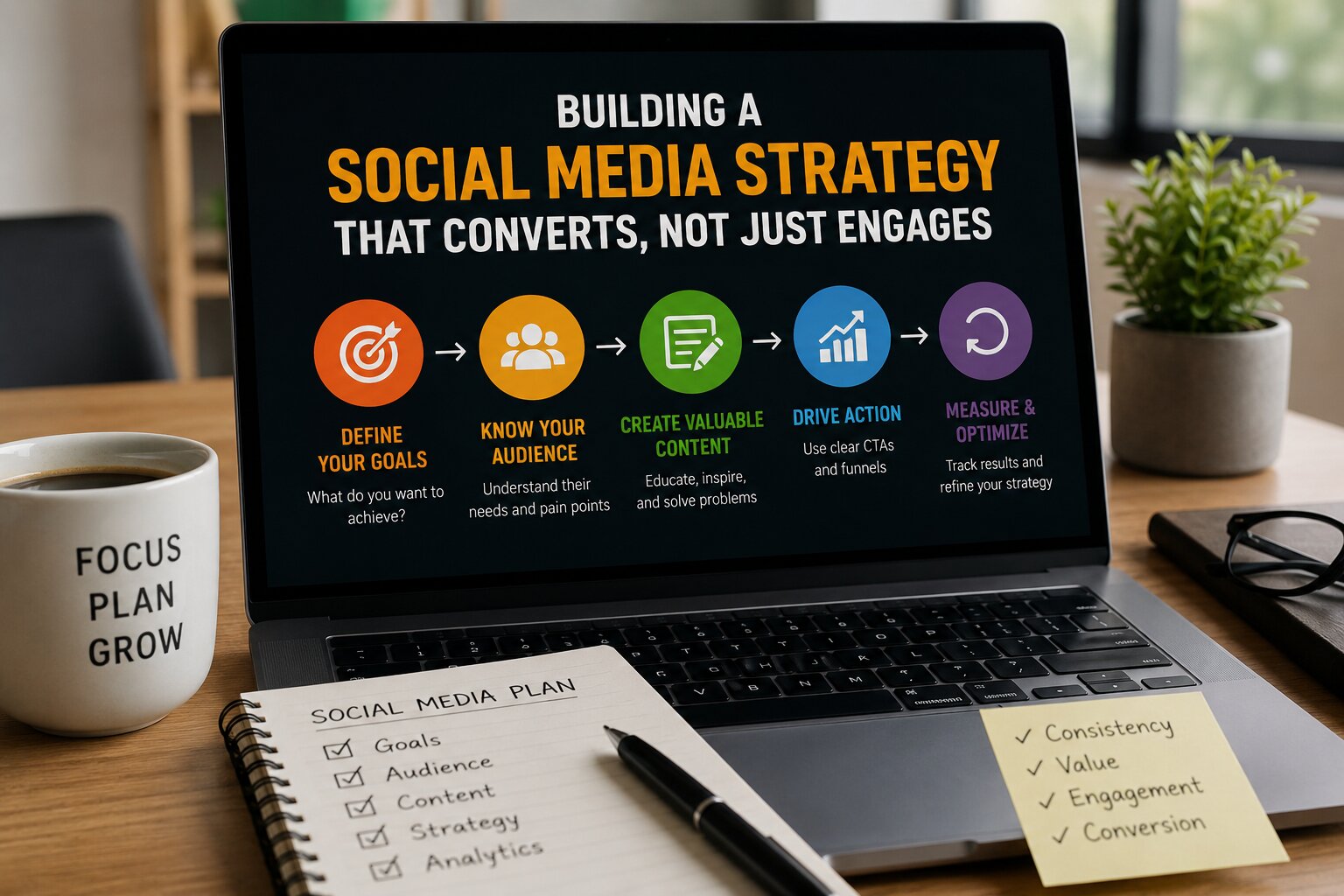
- Content mapped to funnel stage, not just to a content calendar. Some posts should build trust, others should directly invite a purchase or a booked call.
- A clear path from post to action, whether that’s a link in bio, a DM automation, or a direct product tag, rather than assuming an interested follower will find their own way to convert.
- Community management treated as a sales channel, since a thoughtful reply to a comment or DM often does more to move someone toward a purchase than another piece of content ever will.
- Reporting built around pipeline and revenue, not just reach and engagement rate, so the team can tell which content is actually working and which just feels productive.
Matching Content to How People Actually Buy
Most purchase decisions don’t happen the moment someone sees a single post. They happen after repeated exposure, growing familiarity, and enough trust to take a small risk. A strategy that treats every post as a standalone attempt to convert misses how that process actually works. Building a mix of trust-building content, direct offers, and social proof, deliberately sequenced rather than randomly rotated, tends to move people through that process far more reliably than chasing whichever format is currently trending.
None of this means engagement stops mattering, it’s still the mechanism that gets content in front of people in the first place. The difference is treating it as a means to an end rather than the goal itself. Brands that build their social media strategy and community management around real purchase intent, not just content volume, tend to see far better returns from the same time and budget investment.
Measuring the Right Things From the Start
A conversion-focused strategy also changes what gets measured week to week. Instead of celebrating a post that performed well on reach alone, teams start tracking how many people clicked through, how many of those visits turned into a lead, and how much revenue eventually traced back to that specific piece of content. That shift in reporting habits, more than any single tactic, is usually what separates social media accounts that genuinely grow a business from ones that simply look active.