





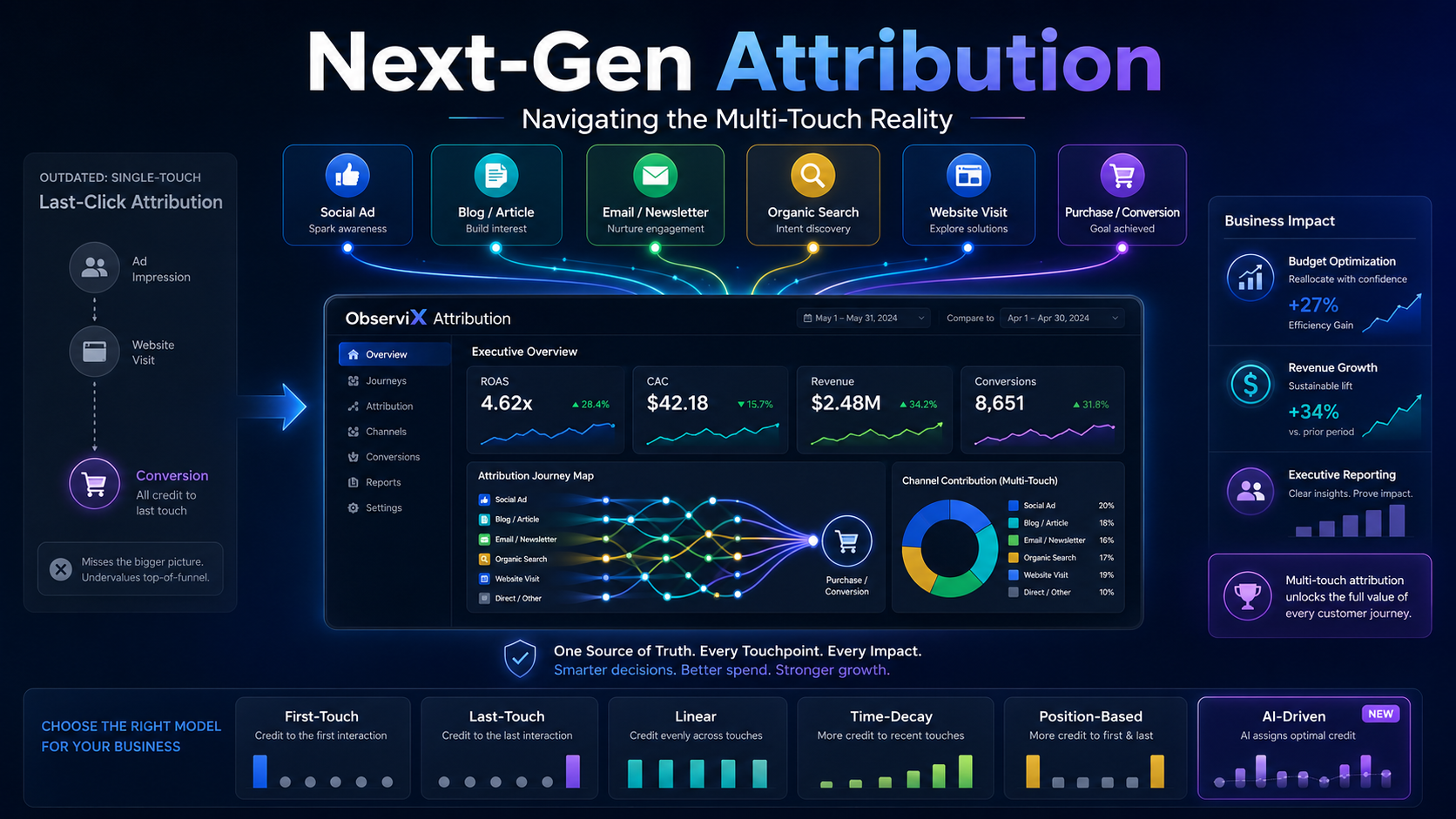
For years, digital marketing operated on a simple, albeit flawed, premise: the last click wins. If a user clicked a retargeting ad and bought a product, that specific ad received 100% of the credit. But as any experienced growth leader knows, B2B and B2C customer journeys are rarely linear. Before making a purchase, a modern buyer might click a LinkedIn ad, read three blog posts, subscribe to a newsletter, open an automated email, and conduct multiple organic searches.
When you rely on outdated analytics, you are essentially flying blind, misallocating budgets, and scaling channels that only appear to drive growth. To stop guessing and start scaling predictably, savvy marketing teams are moving away from siloed platform metrics and adopting comprehensive cross channel attribution tools that unify the entire funnel.
The Problem with Single-Touch and In-Platform Analytics
Relying on ad network dashboards (like Meta Ads Manager or Google Analytics 4) to evaluate performance creates a massive echo chamber. Every platform claims credit for the same conversion, leading to inflated, double-counted ROAS metrics that do not align with actual bank statements.
Furthermore, many organizations attempt to handle this within their CRM. While looking for a robust hubspot marketing attribution setup is a step in the right direction for mapping deals to initial contacts, basic CRM setups often lack the granular behavioral tracking required to capture every micro-interaction. They struggle to attribute value to early-stage content or middle-of-the-funnel nurturing sequences accurately.
To bridge this gap, businesses need an independent, first-party data powerhouse. This is where a dedicated attribution platform becomes indispensable. By operating outside the limitations of walled gardens and standard CRM frameworks, it acts as a single source of truth, connecting every single touchpoint—from the first anonymous website visit to the final closed-won deal—directly to business revenue.
Introducing ObserviX Attribution: Total Visibility Across 6 Models
ObserviX completely eliminates the guesswork from your marketing strategy. By deploying a lightweight, first-party Pixel, the platform captures every customer interaction in real time, matching touchpoint history with actual conversion value.
Because no two business models are identical, a one-size-fits-all model doesn’t work. ObserviX provides six distinct attribution models, allowing teams to analyze performance from every angle:
- First-Touch: Highlights the exact channels and campaigns that generate top-of-funnel awareness.
- Last-Touch: Pinpoints the final action that triggered the conversion.
- Linear: Distributes revenue credit equally across all recorded interactions.
- Time-Decay: Gives heavier weight to touchpoints closest to the time of purchase.
- Position-Based (U-Shaped): Allocates 40% of the credit to the first touch, 40% to the last, and splits the remaining 20% among middle interactions.
- AI-Driven: Uses advanced machine learning to dynamically assign credit based on your historical conversion data and actual buyer behavior patterns.
The true power of ObserviX lies in its side-by-side comparison engine. Marketers can switch between these models with a single click to see how different attribution logic impacts channel valuation, making it easy to spot undervalued campaigns and eliminate budget waste.
Data-Driven Budget Optimization and Executive Reporting
With real-time data ingestion, ObserviX updates your attribution metrics instantly—eliminating standard 48-hour reporting delays. Marketers gain immediate clarity on true Return on Ad Spend (ROAS) and Customer Acquisition Cost (CAC) across Google Ads, Meta, LinkedIn, organic search, and email marketing.
The platform’s predictive budget optimization view allows growth teams to run before-and-after scenarios, accurately projecting the revenue impact of shifting budgets between channels. When it’s time to report to leadership, ObserviX generates executive-ready reports that tie marketing activities directly to bottom-line revenue, proving ROI in seconds and turning the marketing department into a predictable revenue driver.